The room measurement is only the beginning
You have measured the bedroom wall. The wardrobe fits on paper. The overlooked question is whether its longest panel can get around the staircase—and whether the assembled unit can be raised into position without meeting the ceiling.
Furniture planning has three measurements: the final footprint, the route into the room and the space needed to build it. Check all three before delivery. Include skirting boards, door swings, radiators and sockets in the room plan; a nominally clear wall is rarely an entirely empty one.
Walk the delivery route with a tape measure
Start outside the property and follow the actual route. Note the entrance, corridor turns, stairs and final doorway. In a Surbiton conversion, a landing may matter more than the front door. In a Woking apartment, the lift and building delivery arrangements may be the limiting factors. The particulars of your address matter more than the neighbourhood label.
Use the manufacturer’s package dimensions as well as the assembled dimensions. Do not assume that because flat-pack furniture comes in boxes, every box is small or manageable by one person. Ask where delivery ends: a building entrance and the room of choice are not the same service.
Your planning checklist
- Check packaged dimensions and the longest individual panel.
- Measure doorways, turns, lift access and stairs.
- Confirm the delivery point and any building restrictions.
- Reserve enough floor and ceiling clearance for the specified assembly method.
Build a sequence, not a mountain of boxes
Decide which furniture makes the home usable first. That might be a bed and one wardrobe rather than every occasional table. Keep the working area clear and avoid opening several products at once; similar-looking fittings are easy to confuse once their labels disappear.
Check deliveries for visible damage and completeness according to the supplier’s instructions. Keep the instructions and fittings associated with their product. Report missing or damaged parts promptly rather than asking an assembler to improvise a structural substitute.
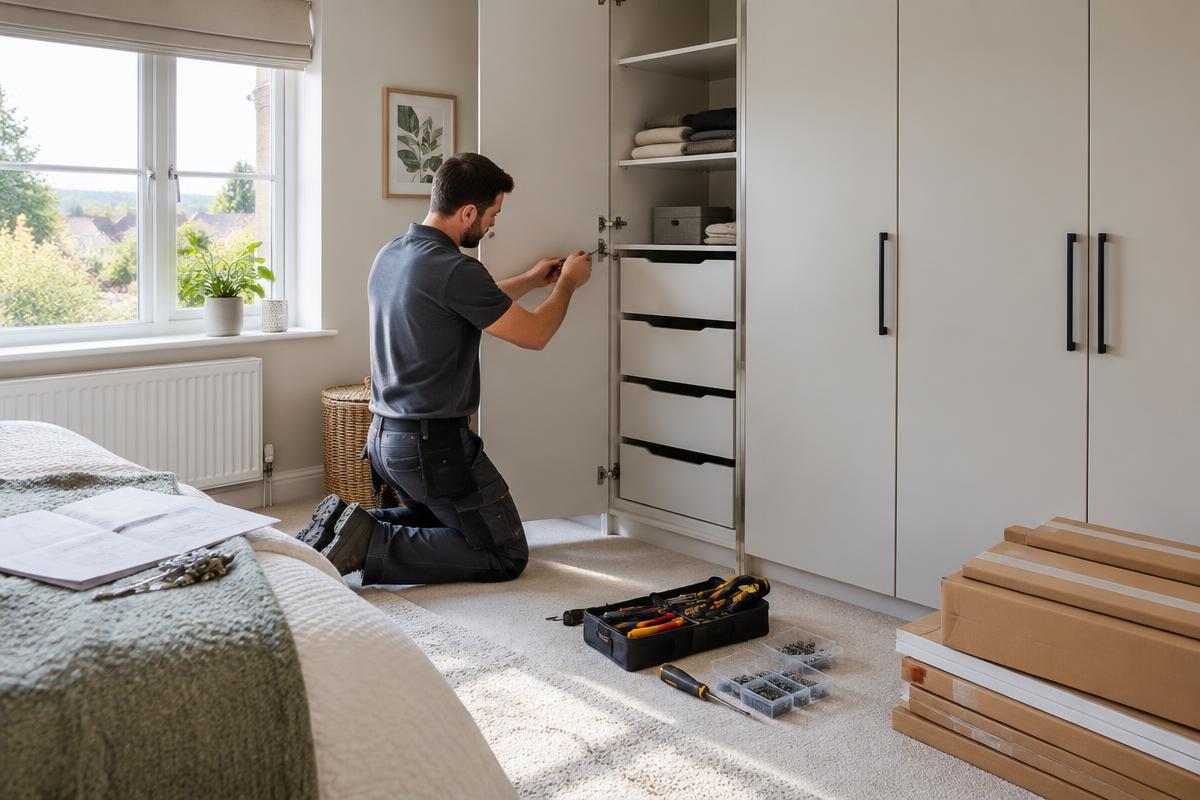
Share exact model names or product links when requesting assembly. “One wardrobe” could describe very different work: sliding doors, internal drawers, hinged doors and wall attachment all affect the plan. Manufacturer requirements may also call for two-person handling.
Treat dismantling as preparation for the next build
Not every piece of furniture is designed to survive repeated moves. Glued joints, damaged panels and previous modifications can make disassembly difficult or destructive. Photograph the item and tell us whether the aim is reuse, relocation within the home or removal.
For reusable furniture, keep hardware labelled by item and preserve the instructions. Photograph useful details before dismantling, empty drawers and cupboards, and make space for panels. Avoid treating a pile of loose fittings as something that can be sorted out at the other end.
Dismantling does not automatically include transport, removal or disposal. Agree those arrangements separately. If an old bed must come apart before its replacement can be assembled, make that sequence explicit when booking.
Assembly is not finished until the safety steps are finished
Follow the product’s instructions, including any required wall anchoring. IKEA’s Secure it advice warns about furniture tip-over and calls for appropriate restraints and wall-specific hardware. Standing upright is not the same as being ready for use.
Tell the assembler about wall-attachment requirements in advance, particularly in a rented property where permission may be needed. If safe anchoring cannot be completed, do not treat the furniture as finished and ready simply because its doors are aligned. Keep children away from incomplete or unsecured furniture.
Write the move-in brief once
List each product, its location, whether the boxes are already in that room and any access constraints. Add dismantling as a separate task, with photographs of the existing furniture. Specify which items are essential on the first visit and which can follow later.
Hello Handy’s assembly and dismantling services can be planned around that list. Team size and hours should reflect the actual products and handling requirements, not a guessed per-item price. Request a quote if the scope is uncertain, or use the calculator to choose time and crew; the final bill is based on time actually spent.
The aim is not to have every box disappear on day one. It is to end the day with the right furniture safely usable, the remaining parts organised and no avoidable surprises waiting on the landing.
Sources & further reading
IKEA UK — Secure it: anchoring furniture safelyHello Handy · Local help
Ready to make a start?
Share your postcode, job details and preferred timing. We’ll help you plan the right visit.